Breathlessness (also known as dyspnea) refers difficulty breathing or sensation of shortness of breath, or degree of distress involved on activities of daily living. It is an extremely common symptom but can be both distressing and frightening for patients and cares. Breathlessness may occur in conjunction with other symptoms such as cough, chest pain, chest tightness, and air hunger the feeling of not enough oxygen along with fever too.
It can be caused by a variety of conditions affecting the lungs, heart and/or general circulation. In these cases, breathlessness occurs due to a fall in levels of oxygen in the blood, increased levels of carbon dioxide or just difficulty expanding lungs. The possible causes of breathlessness are extensive difficulty in breathing, disordered or inadequate breathing, uncomfortable awareness of breathing and as the experience of breathlessness. It is frequently seen in emphysema, chronic airflow limitation, pneumonia (infection of lungs), asthma, heart failure, dementia, multiple sclerosis, and AIDS. The majority cancer patients also experience some degree of shortness of breath, even if primary cancer did not arise in lung, which normally worse on exertion or exercise. Breathlessness caused by diseases of heart may become worse when you lie down, caused orthopnea. Sometimes breathlessness is caused by no disease at all and may be associated with poor fitness and reduced exercise tolerance.
How does it develop! In general, there are four main mechanisms that can make someone feel short of breath:
•Decreased oxygen levels in blood stream
•Increased levels of carbon dioxide in blood stream
•Decreased ability of the lung to expand
•Increased workload associated with normal breathing.
Causes. There is a very long list of possible causes for breathlessness. As mentioned, several different systems may be involved (not necessarily only lungs) making analysis somewhat difficult. However, the pattern of breathlessness and other symptoms can give clues to the likely cause. Some possible causes of breathlessness are described below:
Respiratory Causes:
Airway obstruction. Obstruction of air passages in nose, mouth or throat can cause breathing difficulties. A characteristic example of obstructive lung disease is asthma. In this condition bronchi (large airways) are narrowed and clogged with lots of mucous. Other obstructive airway diseases include chronic obstructive pulmonary disease (COPD), emphysema, bronchiectasis and acute or chronic infection (bronchitis.
Lung tissue. Damaged or reduced amount of functioning lung tissue; Lung tumors, infection (pneumonia) or fluid in lungs (pulmonary edema) can affect ability of airways to fill and transfer oxygen into blood stream. Restrictive lung diseases caused by fibrosis (e.g., radiation damage) also limit the ability of lungs to expand and exchange gases with the blood. Pneumonia symptoms are fever, productive cough, shortness of breath, and pleurisy chest pain. Inspiratory crackles may be heard on exam.
Impaired ventilator movement. Pain in chest, abnormalities in abdomen (that compress on lungs), deformities of chest wall (such as kyphosis) and weakness of respiratory muscles (caused by diseases such as multiple sclerosis) may all reduce the amount lungs expand.
Pulmonary circulation. Clots in lungs called pulmonary emboli (PE) cause a sudden onset of shortness of breath because blood is unable to reach the airspaces to pick up oxygen needed by body. Pulmonary embolism classically presents with an acute onset of shortness of breath. Other symptoms include pleurisy chest pain, cough, hemoptysis, and fever. Risk factor includes deep vein thrombosis, recent surgery, cancer, and previous thromboembolism
Cardiac causes. Heart failure, mitral valve disease, cardiomyopathy, pericarditis, and many other cardiac problems frequently cause shortness of breath. This occurs, as heart is unable to pump blood to supply enough oxygen to rest of the body. In addition, heart problems can cause pooling of blood and fluid in lungs (pulmonary edema) which further limits gas exchange in lungs. Heart diseases usually first cause shortness of breath during exertion but later they develop characteristic types of breathlessness called orthopnea (breathlessness whilst lying flat so you may find it more comfortable sleeping on several pillows) and paroxysmal nocturnal dyspnea (PND; breathlessness that wakes you up from sleep).
Neoplastic or cancer. Lung cancers often lead to breathlessness in later stages of disease. This often occurs because it invades, obstructs airways, causes lobar collapse, or produces malignant pleural effusion (fluid around lung that prevents it from expanding). Lung cancer can also cause a condition called lymphangitis, which is thickening of lymphatic in lung. It may cause other symptoms such as chest pain, hemoptysis (coughing up blood) and is frequently associated with smoking. Cancers in other parts of body can also cause shortness of breath from cachexia, anemia, or metastasis (spread) to lung.
Anemia. Associated with reduced amount of red blood cells in bloodstream. These are primary cells involved in transporting oxygen from lungs to the body. They do this by binding oxygen to a special protein called hemoglobin. Without enough blood cells, tissues do not receive adequate oxygen and the heart compensates by trying to pump more blood. This eventually can cause permanent cardiac damage and worsening of angina and congestive heart failure both of which may lead to dyspnea. Anemia that develops gradually usually presents with exertion dyspnea, fatigue, weakness, and tachycardia that may lead to heart failure, caused by low hemoglobin levels is often a cause of dyspnea. Menstruation particularly if excessive can contribute to anemia and to consequential dyspnea in women. Headaches, numb sensation in the head, blurred vision caused by hypotension behind the eye due to lack of oxygen and pressure, some feels sever head pain which led to brain damage are further symptoms to some. Symptoms of this loss of concentration, focus, fatigue, language faculty impairment and memory loss are appearing in normally.
Other causes. Sometimes emotional distress or anxiety (nervousness) can cause you to breathe faster (hyperventilation) and make you feel short of breath, and neurological, musculoskeletal, endocrine, hematologic, and psychiatric may also be the cause. This can create a vicious cycle as you can become more worried because you feel breathless which leads to more difficulty breathing. Obesity, hyperthyroidism, and other metabolic problems can also cause you to become breathless. Fatigue is another possible cause because the level of effort required to breathe cannot be sustained. Therefore, there are many conditions causing breathlessness that do not arise in lungs. In case of breathlessness, it is first important to rule out all the serious causes such as acute asthma, pulmonary embolus, pneumothorax, hemothorax, acute pulmonary edema and pneumonia, before considering some of the other causes.
Signs: Shortness of breath can manifest as a variety of signs and symptoms, due to the large number of possible causes. However, most common frequent presentation is breathlessness and cough. Other common symptoms include cyanosis (blue discoloration often of fingers, toes, or mouth due to an increase in the concentration of deoxygenated hemoglobin), chest pain, hemoptysis (coughing up blood), and abnormal sputum and altered breathing patterns. If you have a fever associated with your breathlessness you may have an infection of the lungs (pneumonia). All problems with breathing whether of sudden onset or long-term and regardless of other symptoms should be considered seriously. Although many of the possible causes are harmless and easily treated, you should still see your doctor for a thorough medical evaluation.
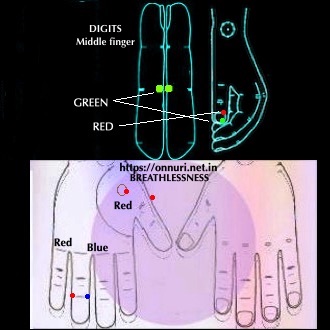
Self-care by breathing exercises such as slow, deep breathing, all the way to abdomen. Relaxation methods to assist. If you experience episodes of breathlessness, make sure you sit upright in a supportive chair, try to breathe slowly and deeply, and administer oxygen and opioids as prescribed by the physician. If the shortness of breath does not resolve, make sure you seek medical attention.
ONNURI energy acupuncture operates on a precise and well-organized hierarchical system~ the Tri spatial or time diagnosis. The exclusiveness of the Tri Chronopuncture is in the possibility of treating the present disease of patient along with roots of disease in the past as well as its prevention in the future. In addition one can put color marking on the prescribed points to assist in the syndromes.
As the process is only on the palm reflect in miniature form of body through the energy channels in compact system. Indirectly concept is exceptionally safe, as no direct application on organs. Aim is to promote health and ease sufferings. May put color dots and affix seeds over the points to get sprouting outcome. No medicine is ever recommended in any form in the form of chemical composition and at the same time not advisable to avoid your medicine prescribed by your physician.
Give a Try!
ONNURI ‘Dr Dinesh kapur’
 ONNURI
Believe in Cure!