Anemia a condition in which the oxygen carrying capacity of the blood is reduced, that develops when blood lacks enough healthy red blood cells. Oxygen is transported around the body by iron-containing pigment haemoglobin in blood’s erythrocytes (red blood cells); these cells are the main transporters of oxygen to organs. If red blood cells are also deficient in haemoglobin, then the body is not getting enough iron. Anemia can result from insufficient or abnormal haemoglobin in the red cell or inadequate or abnormal red cells in the circulating blood.
Symptoms
•Chest pain
•Claudication intermittent of legs and even symptoms of heart failure
•Coldness in palms, or soles
•Concentration poor
•Confusion
•Dyspnoea (shortness of breath) on exertion happens
•Fatigueness is likely to feel most of the time, as organs aren’t getting enough oxygen
•Headache frequent
•Pale body
•Palpitation
•Restless leg syndromes
•Tiredness of body, or feelings of weakness or fatigue, general malaise
One may be able to fight off anemia by diet itself that includes beans and dark leafy greens (foods rich in iron, vitamin B12; calcium can interfere with absorption of iron, so if one has to add in daily lifestyle on iron and calcium, better option to take iron in the morning and calcium in the evening; most of the pregnant women normally develop anemia. A lack of folic acid or vitamin B12 can also prevent the body from making enough RBC that lead to anemia.
In sickle-cell anemia, an inherited condition, red blood cells are misshapen and unable to move through the body. Certain forms of anemia are hereditary, and infants may be affected from the time of birth.
Women in the childbearing years are particularly susceptible to a form of anemia called iron-deficiency anemia because of the blood loss from menstruation and the increased blood supply demands during pregnancy.
Seniors also may have a greater risk of developing anemia because of poor diet and other medical conditions. Iron-deficiency anemia, the most common type, is very treatable with diet changes.
Who’s at risk! If one doesn’t eat enough iron-rich foods or have heavy periods, ulcers, pregnant woman, or recently had any surgery, then there are chances to develop it. People who are undergoing radiation or chemotherapy or battling an infection are also at risk.
Why is it dangerous! As body is not getting enough oxygen and if left untreated, this can damage heart and other organs. Anemia can also cause fatigue, shortness of breath, dizziness, pale skin and concentration problems. It may not have a noticeable symptom that is why it is often observed unexpectedly during blood tests looking for other conditions. It’s diagnosed with a simple blood test called a complete blood count, or CBC. Some rare forms of anemia may be best treated with a bone marrow transplant.
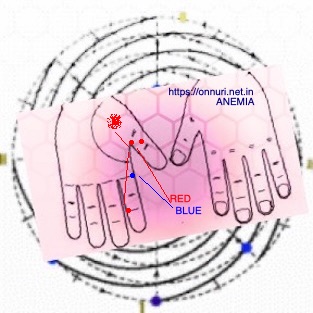
COLORPUNCTURE ONNURI a powerful tool that aide in strengthening the immune system and serves to prevent diseases, controls pain and increases both the ability to function and quality of lives of people. It has helped many who were not successfully treated through conventional medicine per clinical analysis. It is a traditionally accomplished through insertion of very fine needles, or colors or seeds at the certain energy pathways of affected organs or energy flow in miniature form on palm only. To aide in sprouting outcomes one may put red color marking with permanent marker per picture.
https://onnuri.net.in ‘Dr Dinesh kapur’
 ONNURI
Believe in Cure!